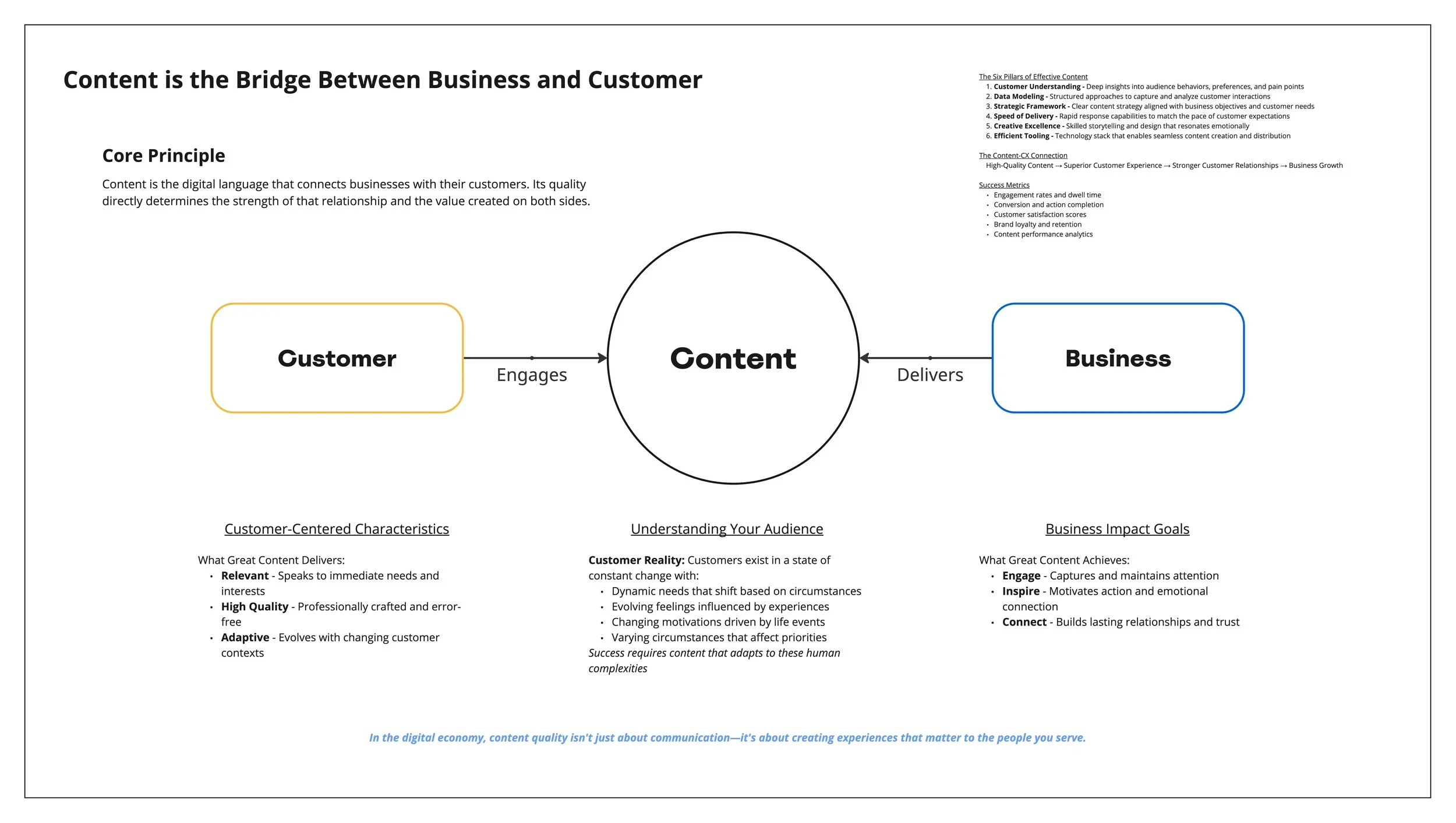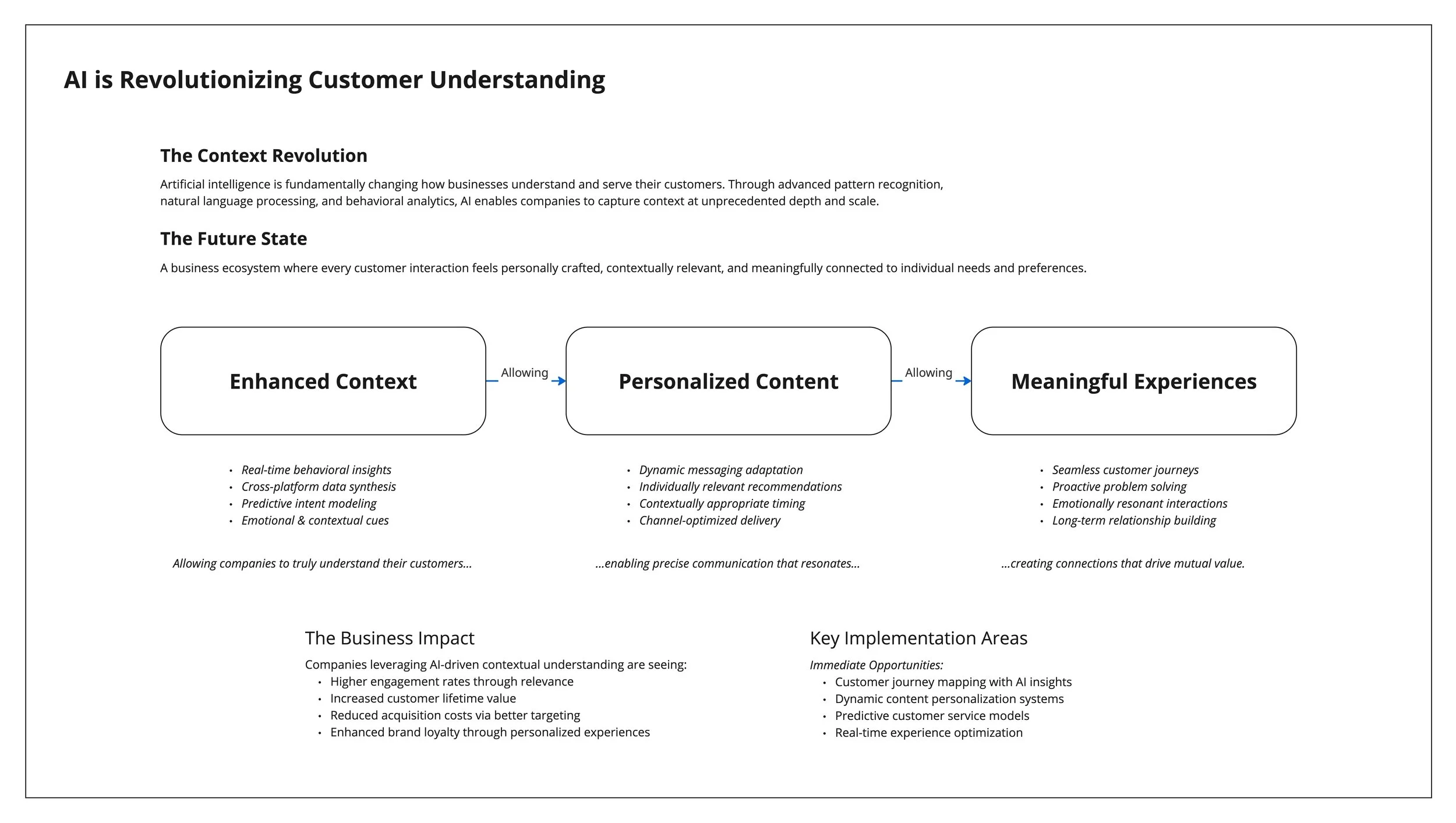
Designing Walmart’s GenAI Content Engine
A systems-first approach to scaling creative production and hyper-personalization for Fortune 1 commerce.
Project Context
As the lead for Smart Creatives, I owned the vision, strategy, and delivery of Walmart’s GenAI-powered content platform.
We transformed a fragmented, manual pipeline into a feedback-driven system that now generates millions of personalized assets across Walmart’s ecosystem and enables faster, more relevant customer experiences at scale.
Aligned 6+ partner orgs and secured executive buy-in across marketing, creative, and legal
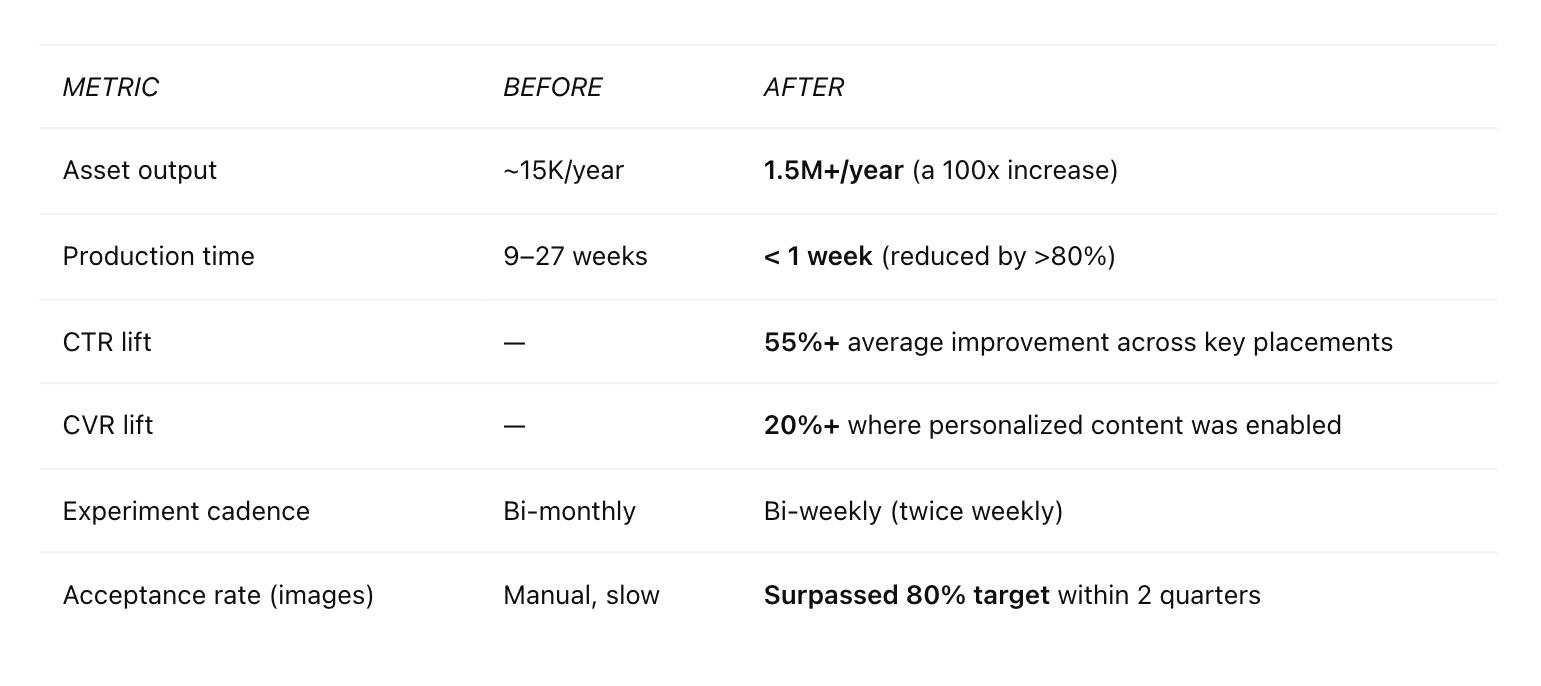
Delivered 100x increase in asset output and >50% CTR lift through scaled personalization
Built agentic validation loops and feedback tooling to drive quality and accelerate adoption
Role & Team Structure
Group PM (0→1 Lead)
Led strategy and execution across…
Product, Design, Engineering, Data Science
P13N, Marketing, Creative, Legal, Analytics
Tools & Tech
LLMs: GPT-4 / GPT-4o
Image Models: Stable Diffusion, Imagen (Vertex AI), proprietary CV models
Infra & Tools: Pinecone, Adobe Suite/AEM (CMS), UserTesting, Confluence, Figma, Jira
Techniques: RAG, In-context learning, CoT prompting, modular evaluators, batched feedback loops
Skills & Fields
AI/ML Systems & Infrastructure: GenAI pipelines, agentic architecture, feedback optimization; Cloud orchestration & modular validation loops
Product Strategy & Execution: Personalization, experimentation (MAB), rapid prototyping, OKRs, KPI trees, XFN roadmap building
UX & Data: Content systems, UI/UX design, data visualization; Structured evaluations, insight loops, customer research
The Challenge: When Content Can’t Keep Up
The initial mandate was deceptively simple: "We need to start using GenAI to ramp up content production."
But the real problem ran deeper. While Walmart had sophisticated targeting models and behavioral signals, most customers still saw static, generic banners, regardless of who they were or what they needed.
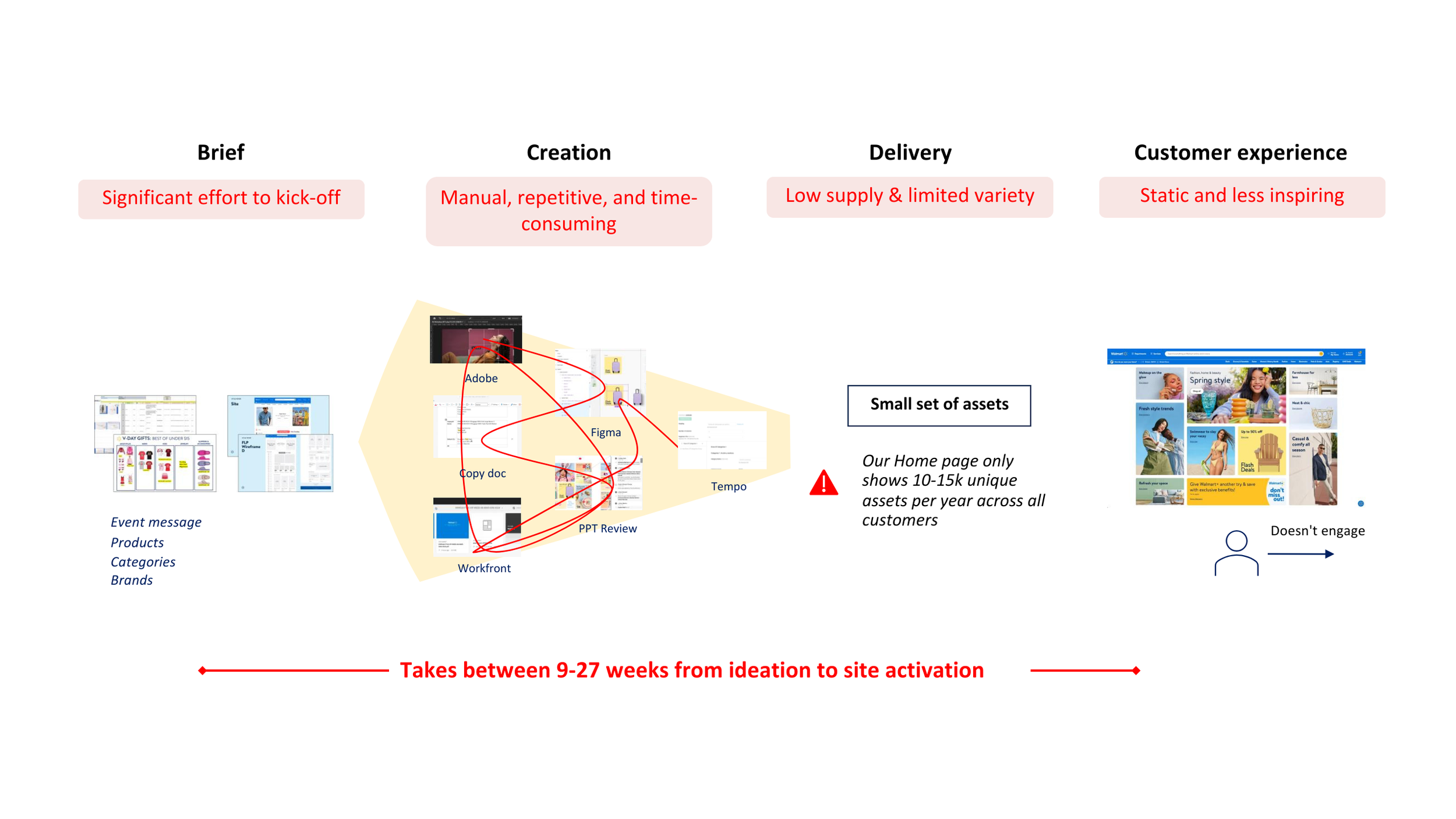
The content gap was systemic:
Content production took 9–27 weeks
~15K unique assets per year across millions of customers
High-traffic placements remained static for months
Fragmented tools, slow handoffs, siloed review processes
Amazon, Meta, and other leaders were rapidly investing in creative automation. Sellers demanded self-service flexibility (and soon, we anticipated, AI superpowers). Internal teams operated at max capacity. The market was moving, but our content infrastructure hadn't kept up.
Reframing the Opportunity
Rather than simply applying GenAI to existing workflows, we saw a chance to reimagine the entire content engine. The question became:
What would it take to make every Walmart digital touchpoint feel timely, relevant, and tailored in real-time?
Vision: Creative infrastructure for the next era
We envisioned Smart Creatives not as a tool, but as a creative infrastructure layer—the missing piece that would finally activate Walmart's sophisticated personalization capabilities.
In this future:
Content adapts in real-time across every digital surface
Personalization becomes an ongoing dialogue between customer signals, creative possibilities, and system intelligence
Relevance isn't just a targeting function—it's embedded in every piece of creative
Teams can focus on strategy and creativity while the system handles execution at scale
Our North Star: Make relevance effortless.
This wasn't about generating more content faster. It was about building the foundation for experiences that feel genuinely personal—where every banner, every product image, every piece of copy resonates because it understands context, timing, and individual needs.
That vision shaped every decision that followed.
Defining Success
With that ecosystem in mind, we defined success not just by what the system could generate, but by how seamlessly it supported the people who depended on it.
📈 Key Success Metrics:
CTR and conversion improvements on personalized modules
Asset output velocity and acceptance rates
Time to production (goal: under 1 week)
Cross-team adoption and satisfaction
Experimentation velocity and learning cycles
Success meant: Delivering personalized, high-performing content at scale without scaling manual creative effort.
Strategy: Build a System, Not Just Content
1. Start with the End Experience
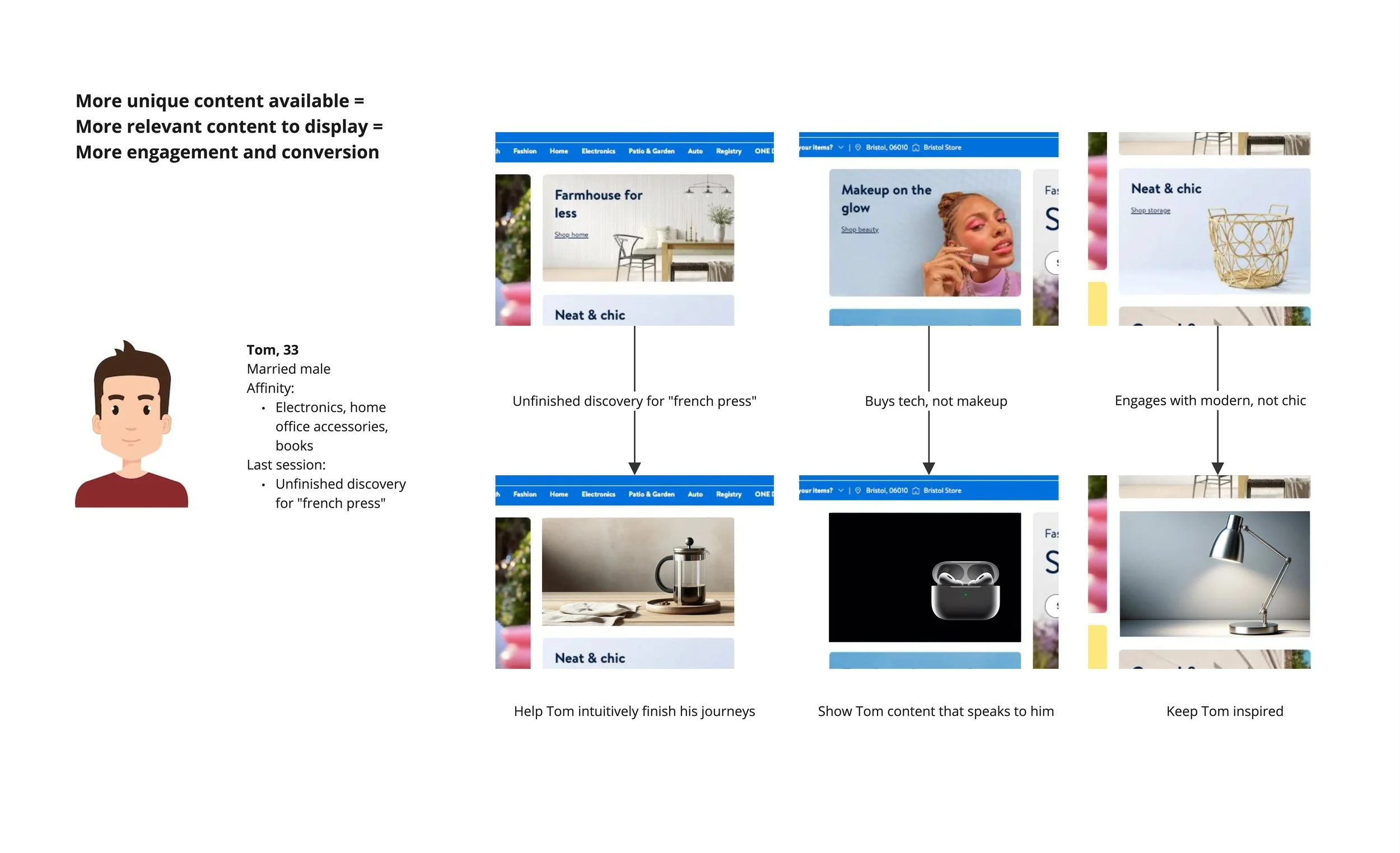
We began where it mattered most: the customer experience. Instead of asking "How do we make more content faster?" we asked "How do we make every interaction feel personal and relevant?"
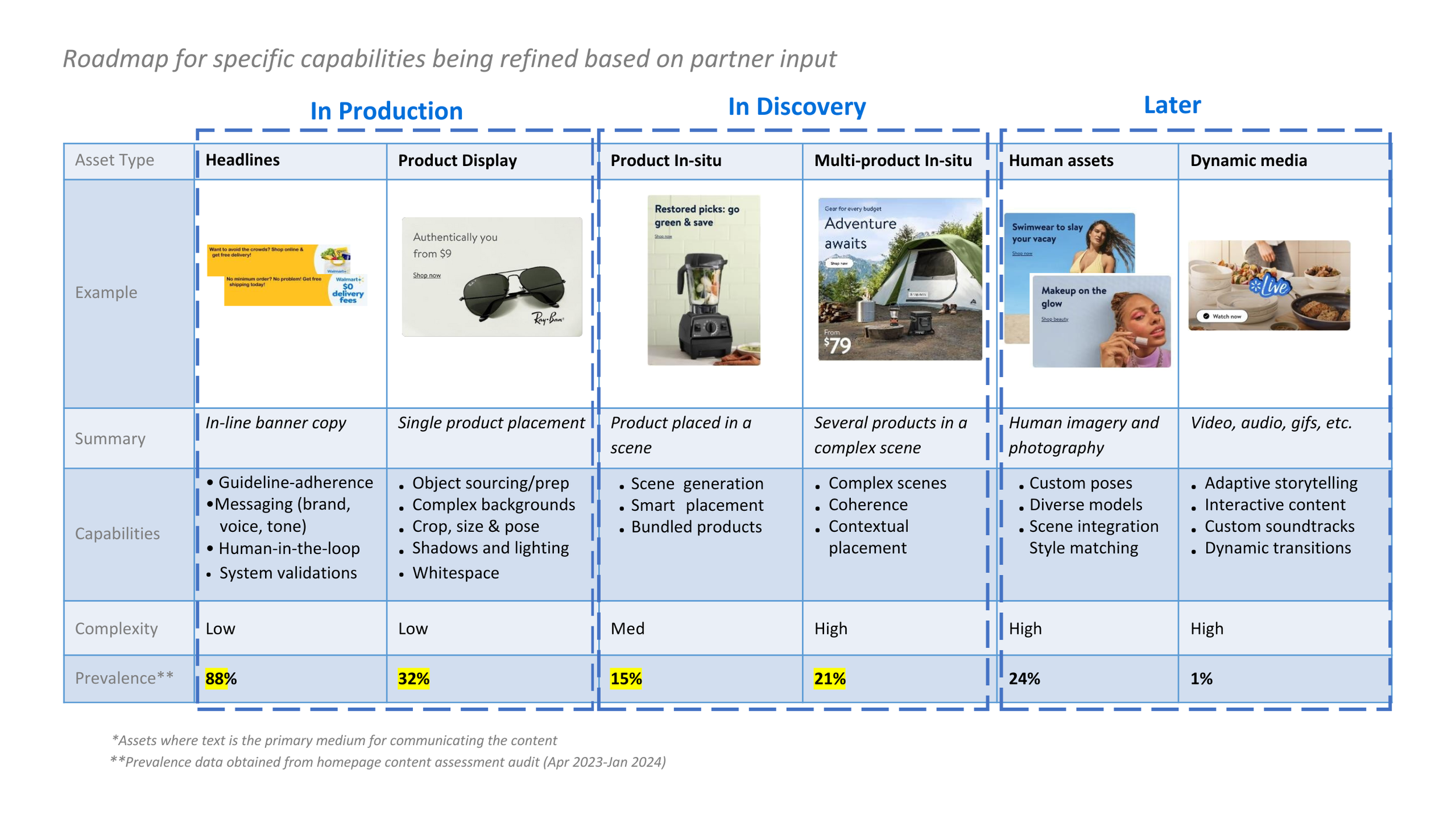
2. Audit for value
We analyzed asset types by cost, complexity, and prevalence, scraping design archives and live modules.
This revealed our entry point: flat-background product images and short banner copy.
High volume. Low lift. Huge upside.
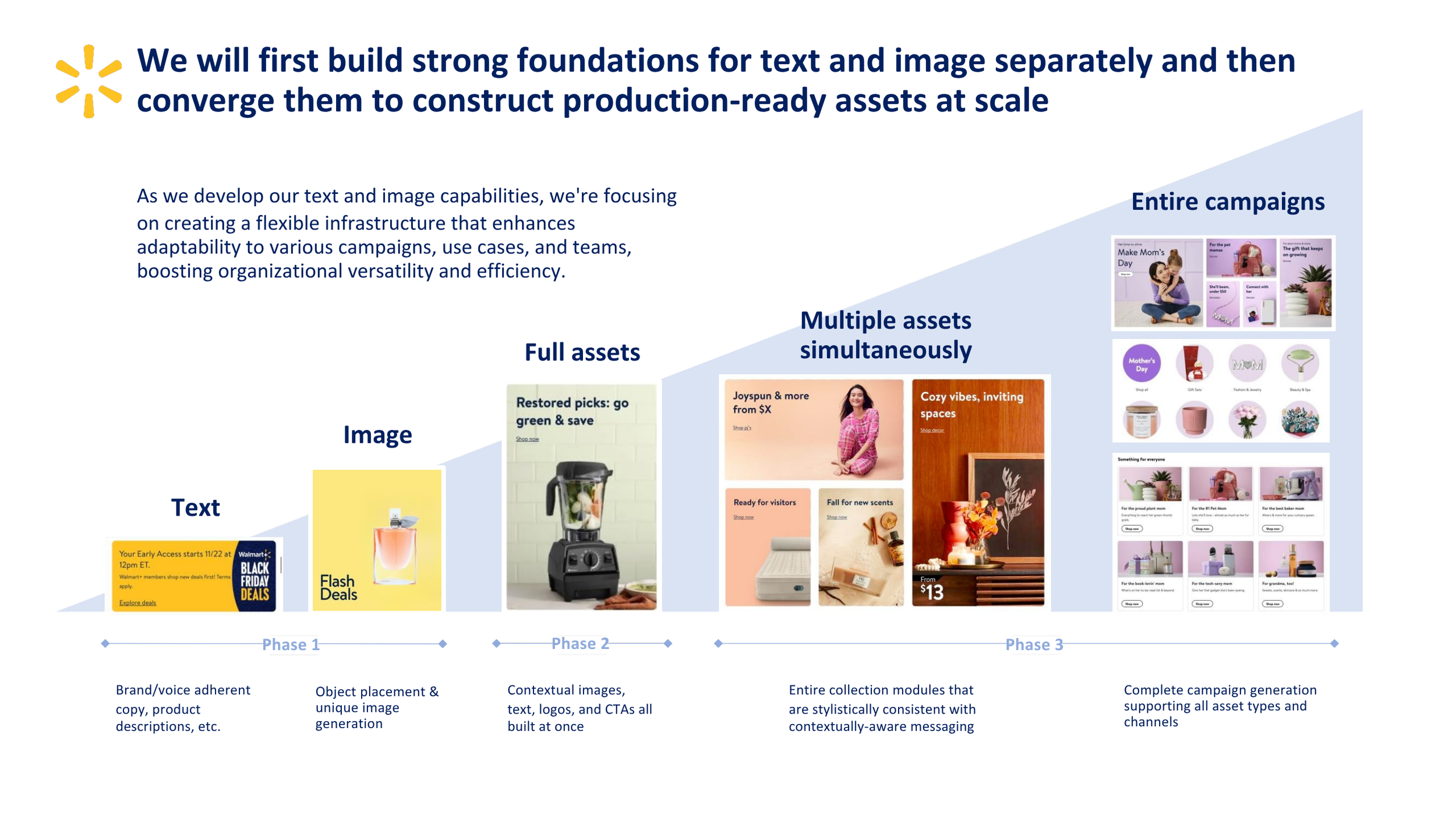
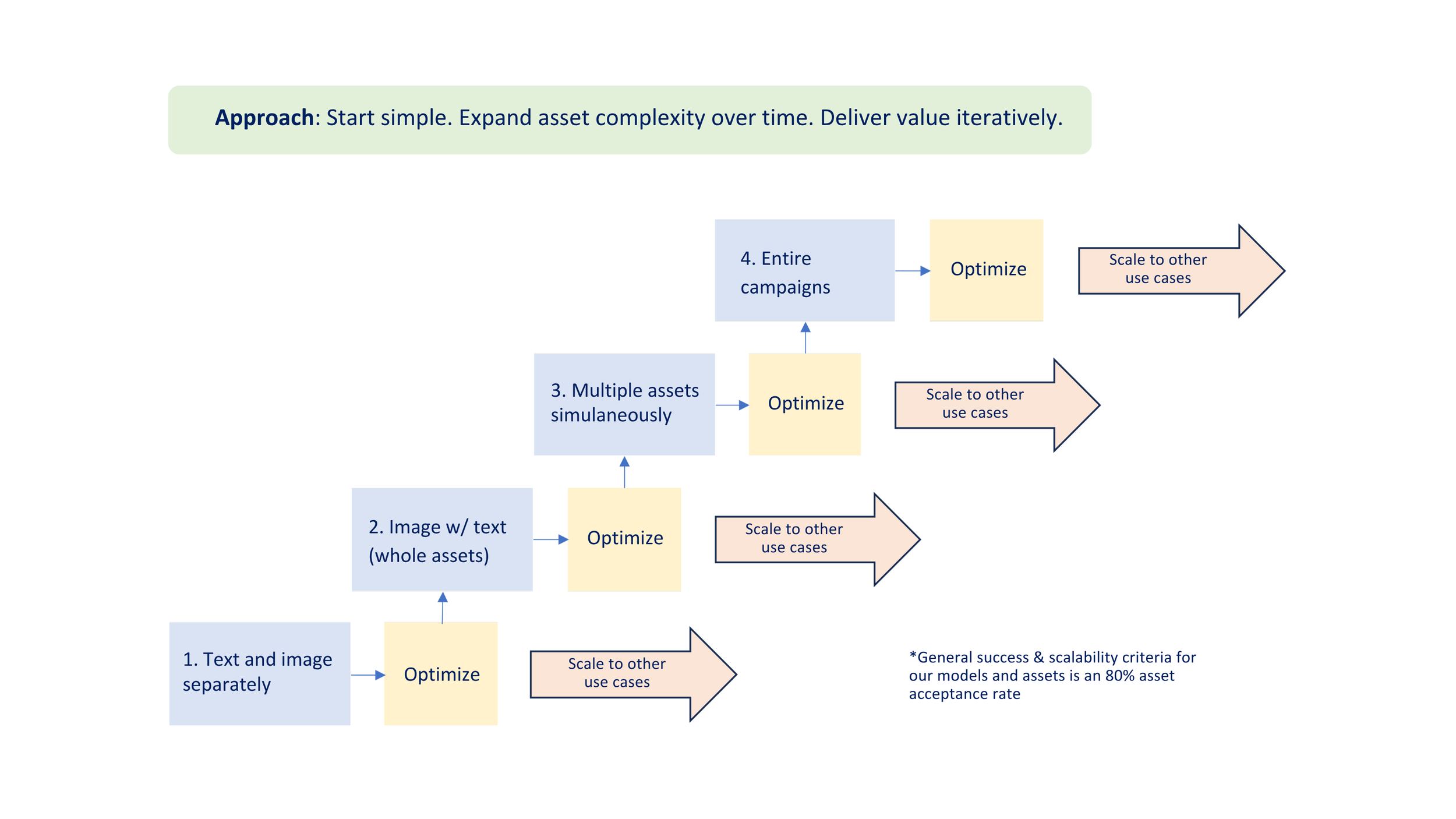
3. Sequence for Learning
We resisted the urge to go wide and, instead, atomized the pieces to isolate and iterate our way to value at scale:
Crawl: Text and image generation independently
Walk: Full assets, contextual & complex scenes
Run: Multi-product in-situ, human assets, full campaign bundles
4. Design for All Users
Smart Creatives wasn't built for a single user; it was built for an ecosystem of interdependent roles:
Marketers needed flexibility and velocity to test creative without starting from scratch
Creatives and designers needed transparency and control to co-create with AI, not be replaced by it
Legal and brand teams needed confidence that generated content would meet standards without manual review bottlenecks
Engineers and ops needed modular infrastructure that integrated with existing systems (Tempo, Workfront, PRISM)
Third-party sellers needed self-serve tools to produce Walmart-grade content under shared guidelines
By designing a system grounded in the core journey of content-delivering teams, we enabled teams across the organization to plug in their own use cases—scaling each capability exponentially once it reached its success threshold in testing
The Smart Creatives Engine
We built a full-stack system designed for scale, speed, and adaptability:
Input → Generate → Validate → Refine → Publish → Learn
Core Architecture
Ingests structured briefs
Bulk-generates copy and imagery based on campaign needs
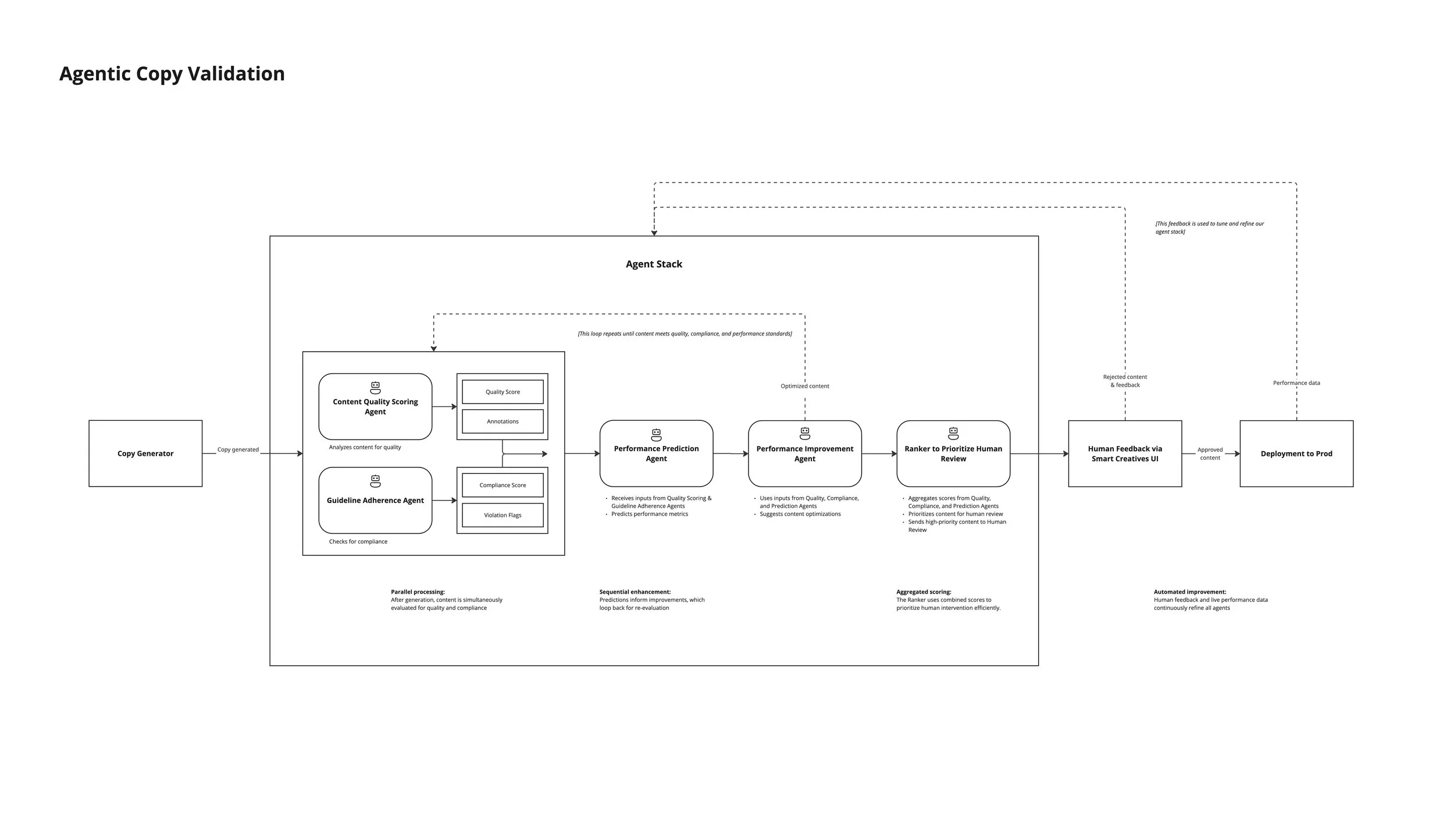
Applies agentic scoring (e.g., compliance, brand match, performance potential)
Enables human-in-the-loop feedback only where necessary
Integrates with personalization and experimentation engines (e.g., MAB)
Learns continuously from accept/reject loops and performance data
Supports editable guidelines and knowledge bases to adapt to use cases
From day one, we architected the platform with extensibility in mind so internal teams, sellers, and affiliates could all create Walmart-grade assets governed by shared standards.
What made this system hum wasn’t any one model or feature. It was the way everything worked together:
Prompt engineering → multi-agent validation
Human feedback → model refinement
Stakeholder input → repeatable workflows
Legal compliance → automated safeguards
Key Innovation: Agentic Validation
Instead of manual review bottlenecks, we built AI agents that scored content for brand compliance, legal standards, and performance potential. Humans reviewed only edge cases, maintaining quality without sacrificing speed.
Strategic Tradeoffs That Defined Success
Throughout the journey, we faced pivotal tradeoffs that shaped the outcome. Here are a few key ones:
Start narrow to scale faster
Insight: Focused on high-volume, low-complexity content types for immediate wins.
Tradeoff: Said "no" to richer content formats in early phases.
Result: Faster time to value and stakeholder confidence.
Build the system, not just the tool
Insight: Asset generation was only one piece. Validation, approval, and optimization had to be part of the system.
Tradeoff: Slower feature output upfront.
Result: Long-term adaptability and organizational trust.
Bias toward experimentation, not perfection
Insight: Use multi-armed bandit (MAB) testing to learn from imperfect but diverse variants.
Tradeoff: Took cross-functional coaching to shift expectations from “perfect” toward “performant”.
Result: Faster optimization cycles and data-driven improvements
Let data shape the roadmap, but not dictate it
Insight: Asset audit gave objective prioritization.
Tradeoff: Balanced with judgment calls around creative feasibility and product timelines.
Result: Guaranteed reach and impact from early swings.
Design for feedback, not just generation
Insight: Feedback was fuel for smarter models.
Tradeoff: UX had to evolve to collect human judgment without overloading reviewers.
Result: Self-improving models and higher acceptance rates
Results: From Vision to Value
Strategic focus drove exponential gains in content velocity and performance in Phase 1 (H1):
What Made This Work
This wasn't just a GenAI implementation; it was organizational transformation guided by three core principles:
Customer-Backed Strategy
Starting with the end experience (personalized, relevant content) shaped every technical and process decision.
Systems Thinking
Recognizing that content generation was only one piece of a larger workflow puzzle led to building comprehensive infrastructure.
Human-Centered Design
Understanding that success required adoption across diverse stakeholders with different needs and incentives.
Final Reflection
Sometimes the best solution demands far more than what you were originally signed up for. The right answer wasn't just implementing GenAI. It was reimagining how content could be generated, validated, and deployed at enterprise scale.
We closed the content gap not through brute force, but by creating systematic leverage: strategic auditing, feedback-rich systems, model-agnostic architecture, and dynamic tooling that scaled capabilities across teams and surfaces.
Strategy isn’t about doing everything. It’s about knowing what not to do and building systems that compound the right bets.
Smart Creatives wasn't just about scaling content; it was about scaling possibility. The principles behind this system offer a repeatable model for any organization aiming to turn GenAI potential into measurable business impact.
In the end, we didn't just build operational efficiency. We laid the infrastructure for personalization at enterprise scale and created the foundation for a future with more relevant, resonant digital experiences—where content isn't just delivered faster, but feels genuinely personal.
Appendix & Further Reading
A few pieces that helped shape how I thought about personalization, systems, and my SC strategy:
The Future of the Professions by Richard and Daniel Susskind — A grounding influence on how I thought about scaling expert judgment via systems. Especially relevant as we explored how to preserve creative standards while expanding output. Some of its concepts and data also helped me build trust and shared vocabulary with our creative partners.
McKinsey: The State of Personalization (https://www.mckinsey.com/business-functions/growth-marketing-and-sales/our-insights/the-future-of-personalization-and-how-to-get-ready-for-it) — This study helped us articulate the business cost of under-personalization.
2023 Omnichannel Personalization Index (https://www.incisiv.com/report-2023-omnichannel-personalization-index)
Multi-Armed Bandits for Model Serving and Experimentation (https://medium.com/data-science-and-machine-learning-at-pluralsight/multi-armed-bandits-for-model-serving-and-experimentation) — Their perspective on balancing speed with rigor was something I referenced often.
Below are foundational frameworks developed to align stakeholders and guide strategic decision-making throughout the project...